
Table of Contents
- Quick Start: What You Need to Know
- Why AI Search Matters for Your Therapy Practice
- Change #1: Write for How People Actually Talk (Not Just Type)
- Change #2: Make Your Website Readable for AI Systems
- Change #3: Restructure Your Content to Answer Real Questions
- Your 15-Minute AI Search Readiness Checklist
Quick Start: What You Need to Know
Here’s what you can do this week to prepare your therapy website for AI search:
- Rewrite your homepage headline to answer “who you help and how” in plain language, like you’re talking to a friend over coffee.
- Add a simple FAQ section with 5-8 questions potential clients actually ask (not what sounds “professional”).
- Check your site’s technical structure: Can someone skim your services page and understand what you do in 10 seconds? If not, simplify.
- Include your location and specialty in natural sentences throughout your content, not just stuffed in a footer.
- Review one old blog post and update it to directly answer a question someone would ask Google out loud.
These aren’t massive overhauls. They’re strategic tweaks that help both humans and AI systems understand what you offer and who you’re for.
Why AI Search Matters for Your Therapy Practice Website Design
Good website design for therapists now has to account for how AI systems read and surface your content — not just how humans experience it. I’ll be honest. When Google started rolling out AI Overviews and ChatGPT became everyone’s research assistant, I watched a lot of therapist websites quietly lose visibility. Not because the content was bad. But because it was written for 2018’s search engine, not 2026’s.
Here’s what changed. People don’t just type “anxiety therapist near me” anymore. They ask full questions: “Is it normal to feel anxious about going back to work after burnout?” or “What kind of therapist should I see if I’m struggling with people-pleasing?”
AI search tools try to answer those questions directly. And if your website isn’t structured to provide clear, conversational answers, you’re invisible in that process. Even if you rank on page one of traditional Google results.
This isn’t about gaming algorithms or adding more keywords. It’s about making your website design for therapists align with how people naturally seek help in 2026. That means clarity, accessibility, and content that sounds human.

Change #1: Write for How People Actually Talk (Not Just Type)
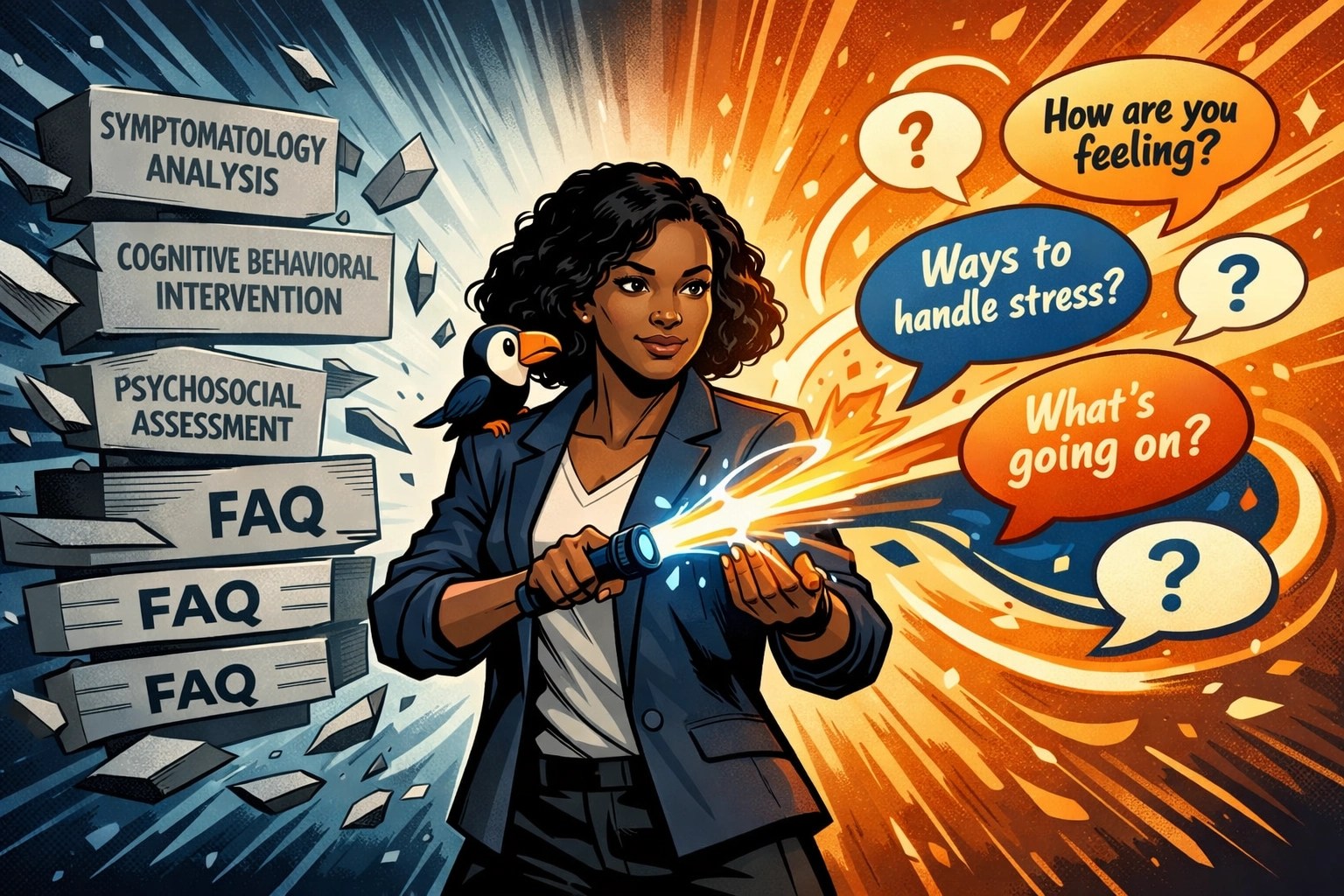
Most therapy websites still use clinical, formal language. “I specialize in evidence-based modalities for adults experiencing relational distress.” That might sound professional, but it’s not how anyone searches.
Real queries sound like this:
- “Why do I shut down when my partner wants to talk about feelings?”
- “Therapist for burnout near Portland”
- “How do I know if I need therapy or just a break?”
AI search systems prioritize content that mirrors natural speech patterns. That’s because they’re trained on conversational data and designed to respond to voice search.
What to change on your site:
Start with your homepage headline. Instead of “Compassionate, Client-Centered Therapy,” try “Therapy for people who feel stuck, overwhelmed, or like they’re doing everything ‘right’ but still not okay.”
Rewrite your service descriptions as answers to questions:
- Instead of: “EMDR Therapy Services”
- Try: “EMDR helps when talk therapy hasn’t been enough. It’s especially useful for trauma, anxiety, and memories that feel stuck.”
Add a FAQ section that uses the exact phrasing potential clients type into search bars. Tools like AnswerThePublic or Google’s “People Also Ask” can show you what’s actually being searched.
Use location-specific language naturally. Not “Serving the greater Seattle metropolitan area” but “I’m based in Ballard, and I work with clients throughout Seattle and nearby neighborhoods.”
This isn’t dumbing down your expertise. It’s translating it into the language your ideal clients already use when they’re searching for help. That’s Strategy and Clarity from the SPACE method working together.
Change #2: Make Your Website Readable for AI Systems
AI systems can’t interpret your website the way a human can. They need clear structure, clean code, and semantic signals to understand what your content is about.
If your site is built on outdated tech, buried behind password walls, or heavy with JavaScript that doesn’t render properly, AI search tools will skip right over it.
Here’s how to improve technical readability:
Add schema markup. This is code that tells search engines what kind of content you have. For therapists, use LocalBusiness schema, FAQPage schema, and Person schema (for your About page). It sounds technical, but most modern website builders (like WordPress with the Rank Math plugin) can add this for you with a few clicks.
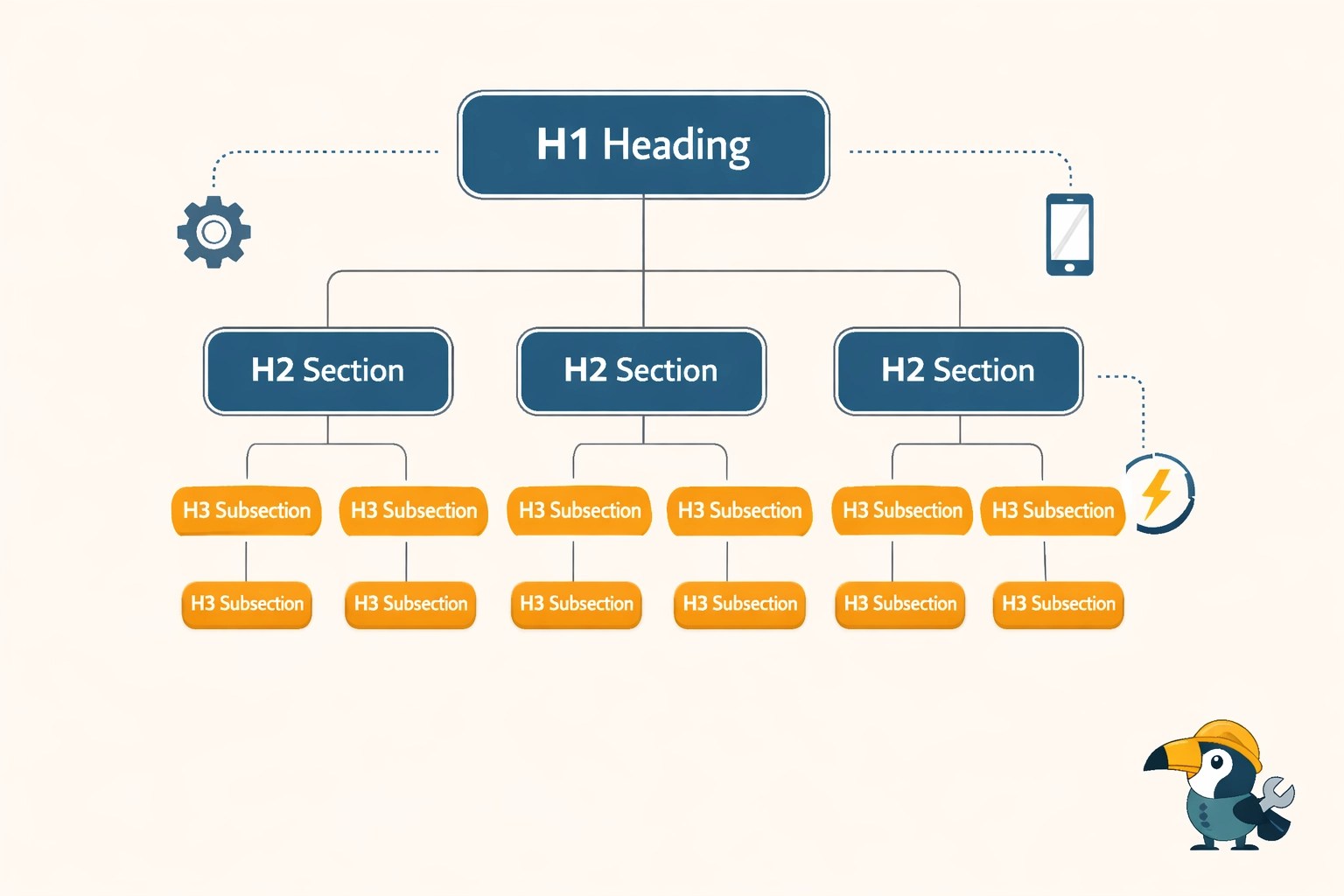
Use clear heading structure. Your page should have one H1 (your main headline), followed by H2s for major sections, and H3s for subsections. Don’t skip levels. This helps AI systems understand hierarchy and relationships between ideas.
Keep content public and accessible. If your best content is gated behind a “Download our free guide!” popup, AI can’t index it. Make your knowledge visible.
Write clean, simple metadata. Your page title and meta description should clearly describe what’s on the page. Not clever. Not vague. Just clear. For example: “Anxiety Therapy in Austin, TX | Specializing in High-Achievers and Burnout.”
Check your site speed. AI systems prioritize content from sites that load fast and work well on mobile. Use Google’s PageSpeed Insights to see where you stand.
Most of these fixes take an afternoon if you’re working with a decent website platform. If your site is ancient or you’re not sure where to start, this is exactly the kind of thing we help with in our website design services. We build sites that both humans and AI systems can actually read.
Change #3: Restructure Your Content to Answer Real Questions
Your existing blog posts and service pages probably have good information. But are they structured to answer the specific questions people ask when they’re looking for a therapist?
AI Overviews pull from content that directly answers natural language queries. If your content meanders or buries the answer halfway down the page, it won’t get featured.
How to restructure for AI search:
Start with the answer. If someone asks “What’s the difference between a therapist and a psychologist?” don’t start with a history of mental health care. Answer the question in the first paragraph, then provide context.
Break up long paragraphs. AI systems and human readers both prefer content that’s scannable. Aim for 2-4 sentences per paragraph. Use bullet points and subheadings generously.
Add attribution and credibility signals. If you’re citing research or best practices, link to reputable sources. If you have specific training or certifications relevant to the topic, mention them naturally. Example: “In my training as an EMDR therapist, one thing that surprised me was how quickly clients noticed shifts.”
Update old content. Go through your blog and service pages. Rewrite intros to directly answer common questions. Add a quick table of contents if the post is long. Make sure each section has a clear, descriptive subheading.
Use location and specialty naturally. Instead of a clunky “If you’re searching for trauma therapy in Denver,” just say “I work with clients in Denver who are navigating trauma, complex grief, and post-traumatic growth.”
The goal isn’t to trick AI. It’s to make your expertise as clear and accessible as possible. That’s Authority and Ease working together. You know your stuff. Now present it in a way that helps people find you when they need you.
Your 15-Minute AI Search Readiness Checklist
Use this quick checklist to see where your therapy website stands. You don’t need to fix everything at once. Start with what’s easiest and build from there.
Content & Language:
- Homepage headline answers “who I help and how” in plain language
- Service descriptions use conversational phrasing, not clinical jargon
- FAQ section addresses real questions potential clients ask
- Location and specialty mentioned naturally in 3+ places
- At least one blog post updated in the last 60 days
Technical Structure:
- Clear heading hierarchy (H1, H2, H3) on all main pages
- Schema markup added for LocalBusiness and Person
- Page titles and meta descriptions are clear and descriptive
- Site loads in under 3 seconds on mobile
- No major content hidden behind forms or popups
AI-Friendly Formatting:
- Paragraphs are short (2-4 sentences max)
- Answers appear early in content, not buried halfway down
- Bullet points and lists used where appropriate
- Links to reputable external sources included
- Content sounds like how you’d actually talk to a client
If you checked off fewer than 10, your site probably isn’t showing up well in AI search results yet. That’s okay. Most therapist websites aren’t optimized for this. You’re ahead of the curve just by knowing what to look for.
If you want help mapping this to your specific site, or if the technical stuff feels overwhelming, that’s exactly what we do at Transference Studio. We specialize in website design for therapists who want their sites to actually work in 2026’s search landscape. No fluff. No four-month timelines. Just clean, strategic builds that help you grow your therapy practice without the marketing burnout.
Get in touch if you want to talk through what makes sense for your practice. We’ll keep it simple.