
How to Build a Steady Referral Network Without Feeling Awkward
Most networking advice for clinicians sounds like it was written by someone who sells used cars. Networking doesn’t have to feel like selling. Here’s how to build a referral network that feels like coordinating care, not pitching.
Referral networking works best when you stop framing it as finding leads and start framing it as coordinating care. Look at who’s already seeing your clients, reach out with genuine curiosity instead of a pitch, and protect a small weekly block of time instead of a one-time networking blitz.
Key takeaways
- Shift from “finding leads” to “coordinating care.” That single reframe removes most of the awkwardness from professional outreach.
- Your existing caseload points to your natural allies. The providers already seeing your clients are the easiest, least awkward first connections.
- Consistency beats a networking blitz. Three small 30-minute blocks a week sustains a referral network better than one big push followed by months of nothing.
- Your website closes referrals colleagues already handed you. A confusing or outdated site loses referrals before the client even calls.
- Quality beats quantity. Two deep relationships with providers who understand your work bring in more clients than fifty unused business cards.
Most networking advice for clinicians trying to build a therapist referral network sounds like it was written by someone who sells used cars for a living. You are told to get out there and pitch your services. You are encouraged to hand out business cards like they are flyers for a nightclub. If you are a private practice owner, that kind of approach probably makes your skin crawl. It feels performative and a little bit desperate. It makes the idea of trying to grow your therapy practice feel like a secondary job you never signed up for.
Networking does not have to feel like selling. When you do it right, it actually feels like connecting. It is about building a safety net for your clients so they always have somewhere to go when their needs fall outside your specialty. It is about making sure that your colleagues know you are a reliable resource for their own clients. Once you shift your perspective from “finding leads” to “coordinating care,” the awkwardness tends to evaporate.
The marketing bro problem
The reason networking feels so heavy for many therapists is the way it is framed in the business world. We are taught that networking is about what we can get. We walk into a room or send an email thinking about how many referrals we might land. This creates a subtle pressure that other people can sense. It makes every conversation feel like a transaction.
For the neurodivergent clinician or the introverted practitioner, this is even more draining. Trying to mask your discomfort while reciting a scripted elevator pitch is a recipe for burnout. The truth is that the best referral networks are not built on pitches. They are built on genuine professional relationships. You do not need to be a social butterfly to have a thriving practice. You just need to be a helpful colleague.
Identify your referral network circle
You do not need to know every doctor in your city. You only need to know the ones who are already seeing your people. Start by looking at your current caseload. If you work with ADHD clients, they are likely also seeing psychiatrists or executive function coaches. If you specialize in perinatal mental health, your clients are seeing OB-GYNs and doulas.
These are your natural allies. When you reach out to them, you are not a stranger asking for a favor. You are a collaborator in their patient’s care. Ask your clients for permission to coordinate with their other providers. This is a built-in way to introduce yourself. You can send a brief note to the primary care doctor saying that you are working with their patient on anxiety. Mention that you wanted to introduce yourself as a local resource for that specific niche. It is professional, it is clinical, and it is zero percent awkward.
To build systems that support sustainable growth, read our guide on how to get more therapy clients.
The 3x3x30 system for consistent growth
Consistency beats a one-time networking blitz every single time. Most people get a burst of energy, go to one event, feel exhausted, and then do nothing for six months. Instead, try the 3x3x30 method. It is a simple way to grow your therapy practice without it taking over your life.
- Research (30 minutes). Identify three potential connections: fellow therapists with a different specialty, or local medical providers.
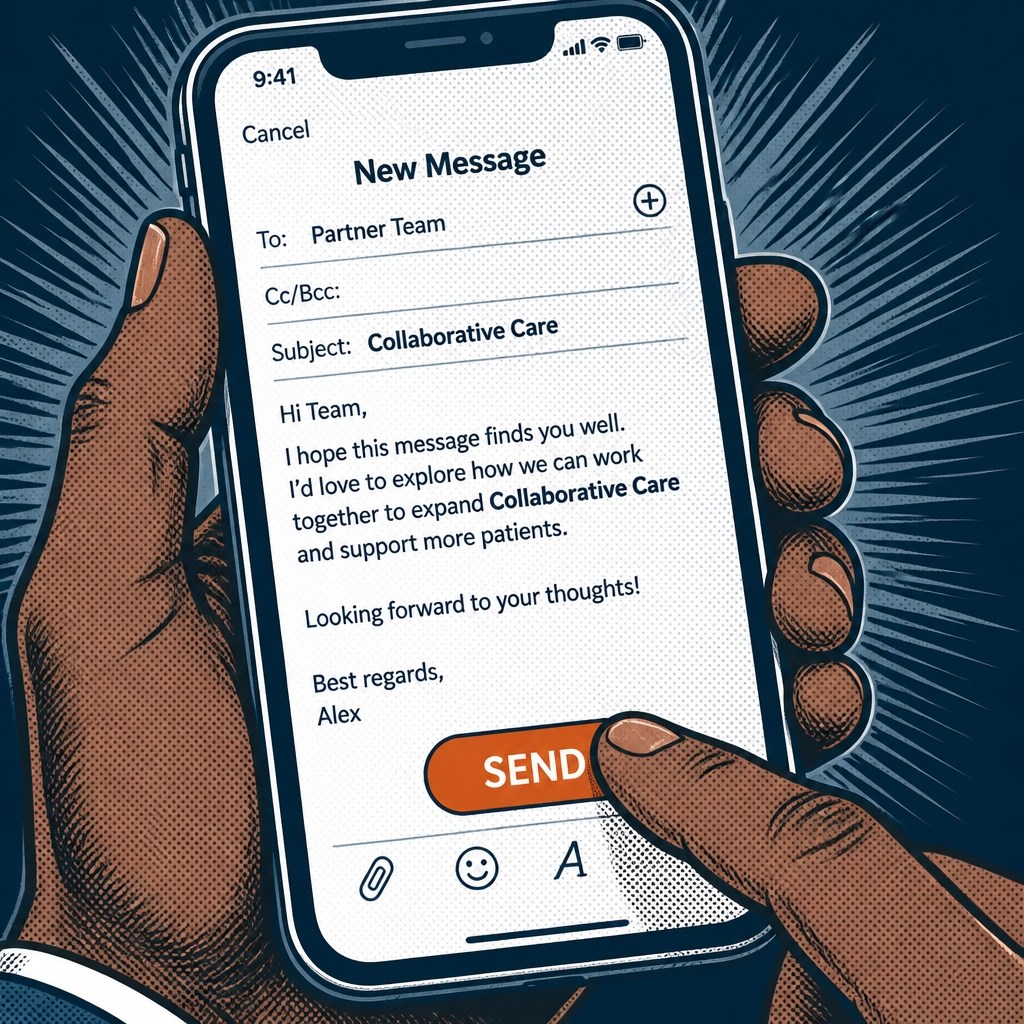
- Reach out (30 minutes). Send three short, low-pressure messages. These are not pitches. They’re invitations for a fifteen-minute virtual coffee or a brief phone call.
- Follow up (30 minutes). Reconnect with three people you’ve spoken to in the past.
This takes ninety minutes a week in total. Because the chunks are small, they do not trigger the same level of avoidance that a big “marketing day” does. You are just doing a little bit of maintenance to keep the engine running.

Outreach scripts that actually work
If you are staring at a blank email and feeling stuck, use a template that focuses on being a resource. Here is an example of what to send to a fellow therapist.
“Hi [Name], I have been hearing great things about your work with [their specialty]. I often have clients looking for that specific support, and I would love to learn more about your practice so I can refer to you with confidence. Would you be open to a 15-minute Zoom call sometime next week?”
Notice that you are starting by offering them something. You are expressing interest in their work. Most people are more than happy to talk about what they do. During that call, you can naturally mention your own niche. You can explain the specific type of person you are best equipped to help. This creates a reciprocal relationship where you both win.
Pair this with a strong brand identity. Our guide on private practice branding shows you how to stand out.
Your website is your referral closer
Even when a colleague gives your name to a client, that client is still going to Google you. They want to see if you look like a good fit before they pick up the phone. This is where your digital presence does the heavy lifting. If your website is confusing or outdated, you are losing referrals that were already handed to you.
Your site should make it incredibly easy for both clients and colleagues to understand your value. It should clearly state your specialty and who you do not work with. Having a dedicated “For Professionals” page or a clear “Refer a Client” button can significantly reduce friction. When you make it easy for a doctor to find your fax number or your secure contact form, you become their favorite person to refer to.

The introvert’s guide to energy management
If the idea of talking to people every week still feels like too much, it is okay to lean into asynchronous networking. You can build a substantial referral network through thoughtful emails, LinkedIn interactions, and professional listservs. You do not have to do the “coffee date” thing if it drains your battery.
Focus on quality over quantity. Two deep relationships with local providers who truly understand your work will bring in more clients than fifty business cards sitting in a drawer. If you find that you are over-functioning and trying to be everywhere at once, take a step back. Your network should support you, not become another source of stress.

Our website design services are built to make that first impression count.
Building a network is just about being a good neighbor in your professional community. When you approach it as a way to improve care for your clients, the sales-y feeling disappears. You are just a professional looking for other professionals to team up with. That is not awkward at all. It is just good business.
Ready to make your website a referral magnet?
We can help you build an online home that does the work for you, so every referral your colleagues send actually converts.
Start the Conversation