
Veterinary SEO: How Animal Hospitals Get Found on Google
It’s 2am on a Tuesday and a pet owner is searching “emergency vet near me.” If your animal hospital doesn’t show up in the top three map results, you basically don’t exist to that person. Here’s how to move from the second page of Google to the top of the pile.
Most pet owners search within a ten-mile radius, so you’re only competing with a handful of local clinics, not the whole internet. A fully filled-out Google Business Profile, a steady stream of recent reviews, dedicated pages per service, and a fast mobile site are what move you into the Map Pack.
Key takeaways
- Local search is the whole game. You’re competing with the three other clinics in your zip code, not the entire internet.
- Your Google Business Profile is your most valuable digital asset. Complete every field, add specific sub-categories, and use real photos of your team and facility.
- Reviews are ranking fuel. Quantity, frequency, and sentiment all factor in, a clinic with fifty recent five-star reviews will almost always outrank one with five reviews from three years ago.
- One service, one page. A single giant “Services” page is a missed opportunity. Dedicated pages let you rank for specific questions like cost or procedure details.
- Site speed and mobile usability are ranking factors. A slow site loses mobile visitors before the first image even loads.
It is 2 AM on a Tuesday. A pet owner is standing in their kitchen looking at a cat that just ate something it definitely should not have. Their first move is not to check the phone book. They do not call a friend. They grab their phone and type “emergency vet near me” into the search bar. If your animal hospital does not show up in those top three map results, you basically do not exist to that person. That is the high-stakes reality of veterinary SEO.
At Transference Studio, we usually spend our time building neurodiversity-affirming sites for therapists. But we have realized that healers come in many forms. Whether you are treating a panic attack or a parvovirus, the digital hurdles are identical. You are a local business that depends on trust and immediate visibility. This guide will show you how to move your practice from the second page of Google to the top of the pile.
Why veterinary SEO starts with local search
Most people searching for a vet are looking for someone within a ten-mile radius. This means you are not competing with the entire internet. You are only competing with the three other clinics in your zip code. Local search is the most important part of your digital strategy because it connects you with people at their moment of highest need.
Google uses three main factors to decide who shows up in the “Map Pack” at the top of the page. These are relevance, distance, and prominence. You cannot change how far away a pet owner lives. You can definitely change how relevant and prominent your hospital appears to be.
Mastering your Google Business Profile
Your Google Business Profile is the most important piece of digital real estate you own. It is more important than your Instagram. It is arguably more important than your homepage for getting new clients through the door. If you have not claimed it, do that today.
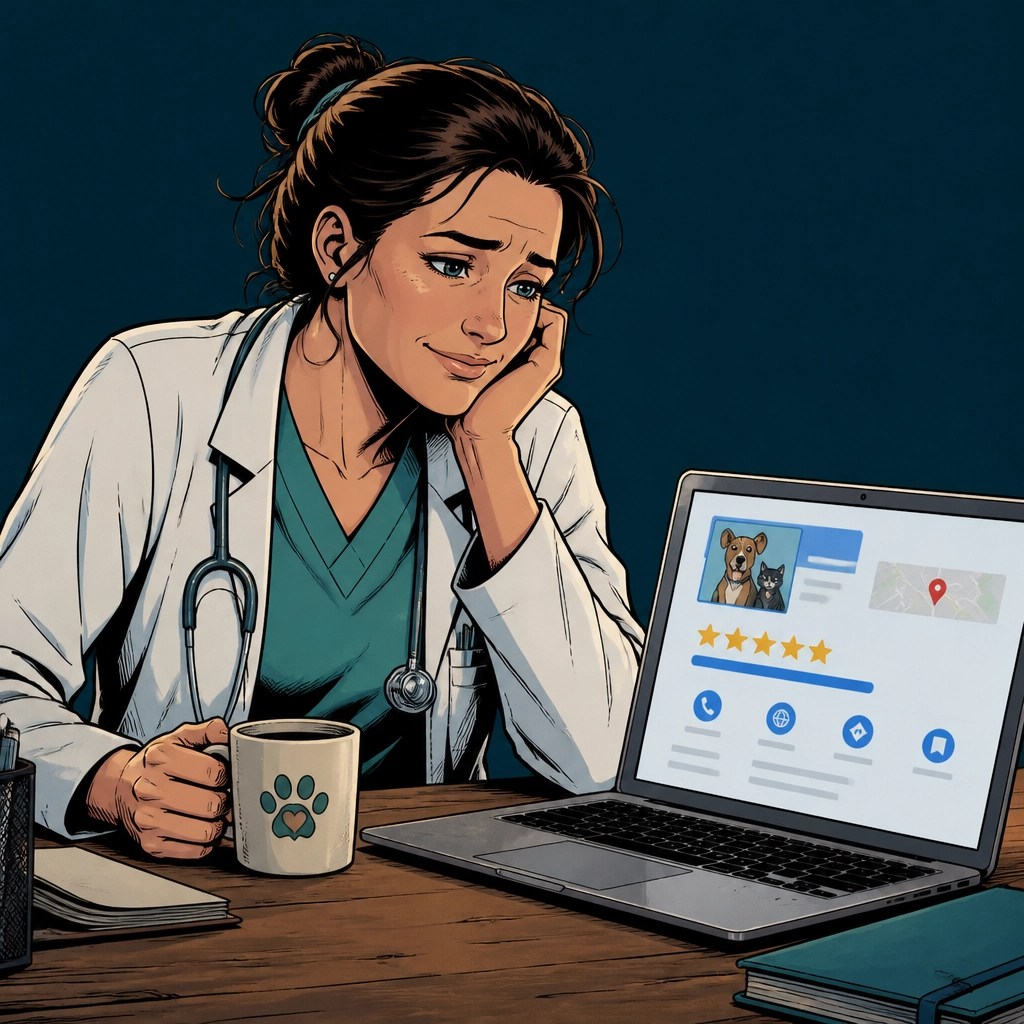
Once you have access, you need to treat it like a living document. Fill out every single field. Do not just select “Veterinarian” as your category. Add sub-categories like “Emergency Veterinarian” or “Animal Hospital” if they apply. List your specific services like dental cleanings, vaccinations, and surgical procedures.
Use real photos of your team and your facility. Stock photos of generic puppies are fine for a calendar, but they do not build trust. People want to see the exam rooms where their pets will be treated. They want to see the faces of the people who will be holding the stethoscope. Read more in our guide to website design for healthcare practices.
The review engine
Reviews are the fuel for your local rankings. Google looks at the quantity, frequency, and sentiment of your reviews to decide if you are worth recommending. A clinic with fifty recent five-star reviews will almost always outrank a clinic with five reviews from three years ago.

Do not be afraid to ask for reviews. The best time is right after a positive appointment when the pet owner is feeling relieved and grateful. You can send a follow-up text or include a QR code on the discharge papers. When you get a review, respond to it. Thank the person for their kind words. If you get a negative review, stay professional. A calm and helpful response to a complaint often does more to build trust than a perfect five-star rating ever could.
Service pages and the art of specificity
Many veterinary websites have one giant “Services” page that lists everything in a bulleted list. This is a missed opportunity for veterinary SEO. Google ranks individual pages, not just entire websites.

Create a dedicated page for every major service you offer. If you provide “cat dental cleanings,” that should be its own page. If you offer “senior pet wellness exams,” that needs a page too. This allows you to rank for specific questions people ask. A pet owner might not search for a vet, but they might search for “how much does dog teeth cleaning cost in [Your City].” If you have a page that answers that question, you just won a new client.
Technical health is not optional
Google does not care how good you are at surgery if your website loads like a dial-up modem. Speed is a ranking factor. Most of your clients are searching on mobile devices while they are on the go. If your site is slow or hard to navigate on a small screen, they will hit the back button before the first image even loads.
Make sure your phone number is “click-to-call” in the header. Ensure your address links directly to Google Maps. These small technical details reduce the friction between a search and an appointment. If you are not sure how your site stacks up, check out our SEO services page.
Building trust through authority
In the world of healthcare, authority matters. Google calls this E-E-A-T, which stands for Experience, Expertise, Authoritativeness, and Trustworthiness. You can signal this by highlighting your certifications. If you are an AAHA-accredited hospital, make sure that logo is visible.

You can also build authority by partnering with local shelters or pet businesses. A link from a local rescue group’s website to yours tells Google that you are a trusted member of the local pet community. These local backlinks are worth their weight in gold for your search rankings.
SEO is not a one-time task that you check off a list. It is a long game of making your hospital the most helpful and visible option in your neighborhood. Start with your Google Business Profile and then move on to your website content. The pet owners in your city are already searching. You just need to make sure they can find you.
Your assignment
Ready to get your hospital noticed?
Start with your Google Business Profile, then let us handle the rest of your SEO strategy.
Get Your Hospital Noticed